Nearly 1 in 3 cats in Australia is overweight or obese, according to recent veterinary reports. That’s not a small problem. Extra weight shortens a cat’s lifespan, increases the risk of diabetes and arthritis, and quietly chips away at their quality of life.
I’ve seen it happen. A cat sleeps more. Jumps less. Plays only when food is involved. And before you know it, movement becomes optional.
The good news? You don’t need to turn your living room into an agility course or force your cat into exhausting play sessions. The right interactive toys can do the heavy lifting, encouraging movement, tapping into natural instincts, and making exercise feel like play instead of punishment.
Let’s break this down properly.
Why lazy or overweight cats stop moving.
What actually motivates them.
And how interactive toys can become one of the most effective tools in your cat’s daily health routine.

Reasons for Cats Becoming Lazy or Overweight
Cats aren’t meant to be sedentary. In the wild, they spend up to 40% of their waking hours hunting, stalking, chasing, and problem-solving for food. Indoor life changes that completely.
The Core Reasons Cats Stop Moving
- Food is too easy: Meals appear in a bowl, no effort required.
- Limited stimulation: Indoor spaces don’t naturally trigger hunting behaviour.
- Owner schedules: Many cats are alone for long stretches during the day.
- Age and routine: Older cats slow down, and routines become repetitive.
Once activity drops, weight creeps up. Then movement becomes physically harder. It’s a feedback loop and breaking it requires smarter stimulation, not more effort from you.
That’s where interactive toys step in.
What Makes Interactive Cat Toys So Effective?
Not all toys are equal. A basic plush toy might be cute, but it doesn’t initiate play. Interactive toys do.
The Psychology Behind Interactive Play
Cats are hardwired for:
- Motion
- Unpredictability
- Reward-based engagement
Interactive toys mimic prey behaviour. They move suddenly. They pause. They trigger curiosity. And crucially, they work even when you’re not actively playing.

That last part matters. Consistency is what drives weight loss and improved fitness—not occasional bursts of activity.
Interactive Toys Helping Lazy or Overweight Cats Exercise (Without Stress)
Exercise doesn’t need to be intense. For cats, frequent low-impact movement is far more effective than short, exhausting sessions.
1. They Encourage Micro-Movements All Day
Instead of one long play session, interactive toys spark:
- Short chases
- Repeated pouncing
- Light jumping
- Slow stalking behaviour
Ten bursts of two minutes spread across the day add up fast.
2. They Remove Pressure From You
Not every cat parent has time to play twice a day. Interactive toys fill the gaps, especially for indoor cats who need stimulation while alone.
3. They Feel Like Play, Not Exercise
Cats don’t respond well to forced activity. Interactive toys allow them to engage on their own terms, which dramatically increases participation.
Types of Interactive Toys That Actually Get Cats Moving
Let’s be specific. These are the categories that consistently show results for lazy or overweight cats.
Motion-Activated Toys
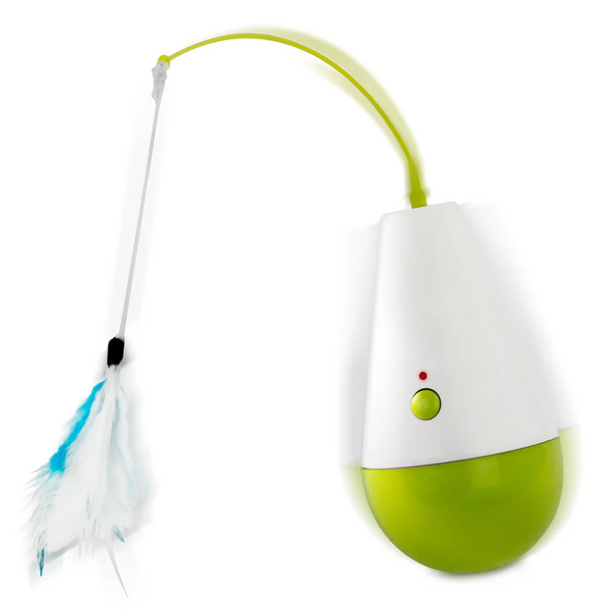
These move on their own when your cat gets close to them. That unpredictability goes right to the heart of hunting instincts.

Best for:
- Cats that ignore static toys
- Older or hesitant cats
- Gradual reintroduction to movement
Puzzle & Treat-Dispensing Toys
Food is a strong motivator. When cats have to bat, roll, or chase a toy to get treats, they have to work for calories again.
Best for:
- Overweight cats
- Food-driven cats
- Slowing down fast eaters
Track-Based Toys
Circular or enclosed tracks with rolling balls keep cats engaged without high impact.
Best for:
- Cats with joint sensitivity
- Beginners who need confidence
- Multi-cat households
Wand-Style Interactive Toys
When used correctly, these encourage jumping, twisting, and sprinting—excellent for weight management when supervised.
Best for:
- Short, high-energy play sessions
- Younger or confident cats
How to Introduce Interactive Toys to a Lazy Cat (Without Them Losing Interest)
Cats are selective. Throwing a new toy on the floor and hoping for the best rarely works.
Step 1: Start Small
Pick one toy that you can play with. Give it to your cat when it is naturally alert, which is usually in the morning or evening.
Step 2: Limit Access
Leaving toys out all day can make them less interesting. Change out the toys every few days to keep their interest.
Step 3: Pair With Positive Reinforcement
Praise. Treats. Gentle encouragement. This builds positive associations with movement.
Step 4: Watch and Adjust
Some cats prefer slow, subtle movement. Others want fast and unpredictable. Let your cat’s behaviour guide your choices.
How Much Exercise Do Cats Actually Need?
Veterinarians generally recommend:
- 20–30 minutes of daily activity
- Broken into short, frequent sessions
For overweight cats, even 10 extra minutes a day can lead to noticeable improvements within 6–8 weeks.
That’s not just weight loss. That’s overall wellbeing.
Final Thoughts: Movement Is Medicine
Cats don’t need treadmills. They don’t need forced routines. They need engagement that feels natural.
Interactive toys meet cats where they are curious, instinct-driven, and selective. When chosen thoughtfully and used consistently, they become one of the simplest ways to improve your cat’s health without stress or struggle.
Start small. Observe closely. Rotate often.
And most importantly, make movement fun again.
Because when exercise feels like play, cats show up willingly. And that changes everything.